
What Another Season of Waiting Actually Costs
If your garage door was installed before the mid-1990s, putting off a look at it isn't free. The real cost isn't cosmetic — it's a spring that lets go while someone's standing under it, a door that comes off its track in a gust, or an opener that doesn't reverse when something's in its path. Rust from salt air works slowly, then all at once. One more humid summer, one more storm season, and small weaknesses in old hardware turn into the kind of failure that sends someone to urgent care or totals a car bumper. This is the conversation to have before hurricane season rolls back around, not during it.
The Part That's Actually a Safety Issue
Here's the fact that should settle most arguments: openers made before 1993 were not required to have automatic reverse safety features. If your opener doesn't have photoelectric sensors (the two small eyes mounted a few inches off the floor on either side of the track) or a mechanical edge sensor, it can keep closing on a person, pet, or car without stopping. This isn't a maybe — it's the single most common retrofit that actually matters for an old door.
- Photoelectric sensors: If your opener doesn't have them, this is non-negotiable. It's a straightforward add-on for most openers and doesn't require replacing the whole unit.
- Spring containment cables: Older torsion springs often weren't installed with a safety cable running through the center. If a spring breaks under tension without one, it can whip loose with real force. Adding containment cables is cheap insurance.
- Manual release testing: On older openers, the emergency release cord can seize up from disuse or corrosion. Test it now, not during a power outage in a storm.
The Part That's About Moisture and Salt, Not Safety
Gulf Breeze's humidity and coastal air do specific damage to old doors that's worth addressing even though it won't put anyone in danger:
- Rusted hinges and rollers: These cause grinding, sticking, and uneven movement. They're a maintenance issue, not a hazard, until they seize completely and strain the opener motor.
- Swollen wood panels: If you have an original wood door from this era, humidity swelling is normal seasonal behavior. Sanding and resealing extends its life; replacing it outright is a choice, not a requirement.
- Worn bottom seal: Afternoon downpours find their way under a cracked or flattened seal. Replacing it is inexpensive and stops water and pests from getting in, but it's not urgent in the way a missing safety sensor is.
What to Leave Alone
Not everything about an old door needs fixing, and this is usually where the real disagreement is. If the door is still balanced — meaning it stays put when disconnected from the opener and lifted halfway — the springs and cables are doing their job and don't need to be replaced just because they're old. A heavier, single-layer steel door that's never struggled against wind isn't automatically a liability either; plenty of older doors were built with enough gauge and bracing to hold up, especially if horizontal struts were added at some point. Don't let a cosmetic dent or faded paint talk anyone into a full replacement. The honest test is function: does it open, close, reverse, and stay on track without a fight? If yes, spend the money on the safety retrofits above instead of a new door.
The One Exception: Wind Load
If your current door predates the stricter wind-load bracing standards used in newer installations and you're in a more exposed spot — closer to the coast, more open exposure to storm winds — it's worth having someone check whether the door and track can take a direct hit. This isn't about the door's age for its own sake; it's about whether it was ever built or reinforced for wind pressure at all.
When to Call Precision Garage Door of Gulf Breeze
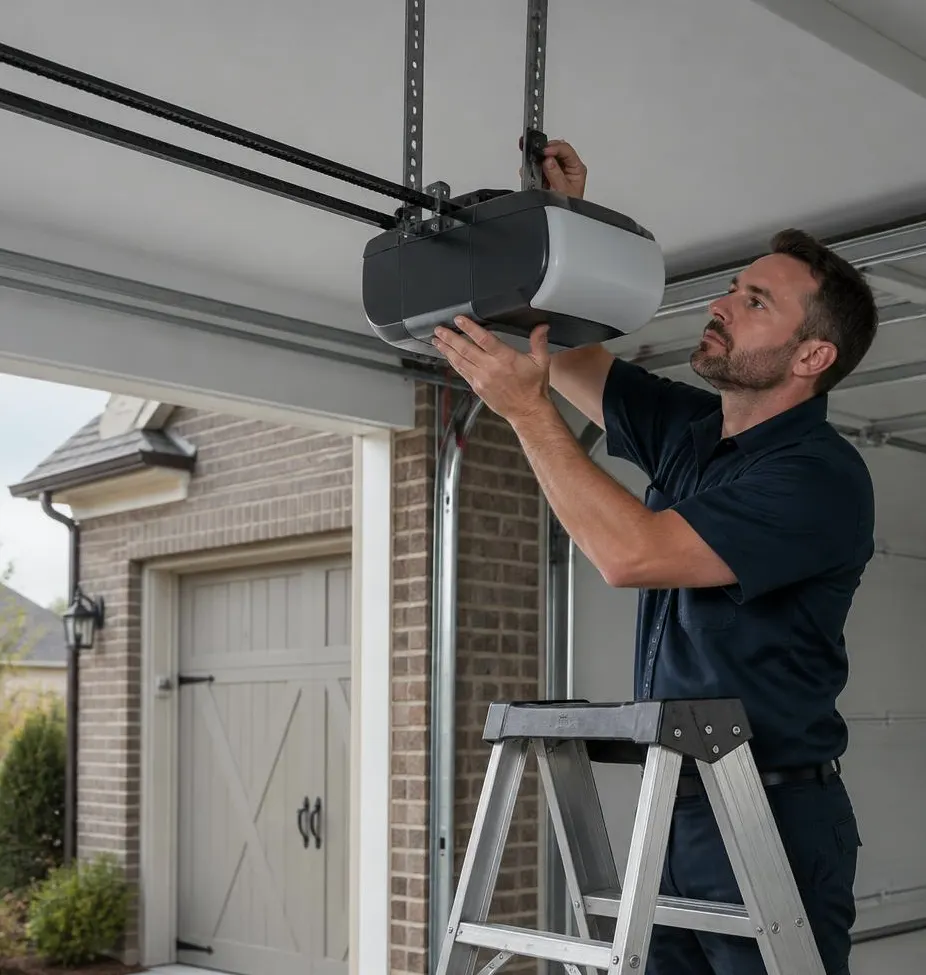
If you're not sure whether your opener has working safety sensors, if the door feels heavy or uneven when you lift it manually, or if you just want an honest read on what's original equipment versus what's been patched over the years, that's exactly what a tune-up visit is for. We handle Garage Door Maintenance & Tune-Up to catch rust, worn rollers, and missing safety hardware before they become bigger problems, and Garage Door Opener Installation when it's time to upgrade an opener that's missing modern auto-reverse protection. We'll tell you straight whether your door needs real work or just needs to be left alone.
If your garage door is older than the house next door's and you want a clear answer instead of a guessing game, call Precision Garage Door of Gulf Breeze today and get it checked before the next storm season sneaks up on you.