
The Mistake: Judging Balance by Watching the Opener
Most homeowners test their garage door's balance the easy way: they hit the wall button and watch the door go up and down. If it opens and closes without jamming, they assume everything is fine. It's an understandable shortcut — the door moves, the opener doesn't seem to be struggling, so why dig any deeper?
The problem is that a garage door opener is designed to compensate for a certain amount of resistance. It will keep pulling an unbalanced door up long after the springs have lost their proper tension, masking the issue until something breaks — usually the opener itself, not the springs. By the time you hear grinding, see the door moving unevenly, or notice the opener straining on one side, the imbalance has likely been quietly damaging the system for months.
What an Unbalanced Door Does to Your Opener
A properly balanced door is held in place almost entirely by its springs, not the opener. The opener's job is just to provide the small push needed to start it moving. When springs are too weak, too strong, or uneven between a two-spring system, the opener has to make up the difference every single cycle. Over time this leads to:
- Premature wear on the drive gear, sprocket, or belt/chain
- Overheating circuit boards from repeated overexertion
- Drifting force settings that can interfere with the opener's automatic reversal safety feature
- Cables jumping off their drums, especially on doors with uneven spring tension
- A shortened opener lifespan overall, even if the motor itself seems powerful enough
In this part of Florida, salt air and humidity accelerate spring corrosion, and heavier wood or insulated steel doors can gain weight from moisture swelling, especially after a stretch of afternoon downpours or a storm system moving through during hurricane season. A door that was balanced in the spring can be noticeably off by fall simply from environmental wear on the hardware.
Tools You'll Need
- A sturdy step ladder
- Work gloves
- A flashlight (for checking springs and cables once the door is open)
No specialty tools are required for the test itself — that's the point. If your door needs more than this to check balance, it needs a technician, not a bigger toolkit.
How to Test Garage Door Balance, Step by Step
- Close the door completely. Start from a fully closed position so you have a consistent baseline.
- Disconnect the opener. Pull the manual release cord (usually a red handle hanging from the trolley rail) to disengage the door from the opener. This step is the one most people skip, and it's the entire reason the test works — you're isolating the springs from the motor.
- Lift the door by hand to about waist height. Use both hands and lift slowly and evenly.
- Let go and watch what happens. A properly balanced door will stay roughly where you left it, or drift down very slowly. An unbalanced door will either slam down or shoot upward on its own.
- Repeat at a few heights — about a third open, halfway, and three-quarters open. Springs can feel fine at one height and clearly off at another, especially if one spring is weaker than the other.
- Reconnect the opener by pulling the release handle again (or following your opener's instructions) and run the door through a full open-close cycle to make sure it reconnects properly and travels smoothly.
What You Can Check Yourself vs. What Needs a Technician
Homeowners can safely do the balance test above, along with a visual check for rust or pitting on the springs and cables, and listening for unusual grinding or straining from the opener during normal use. These are all things that tell you whether there's a problem.
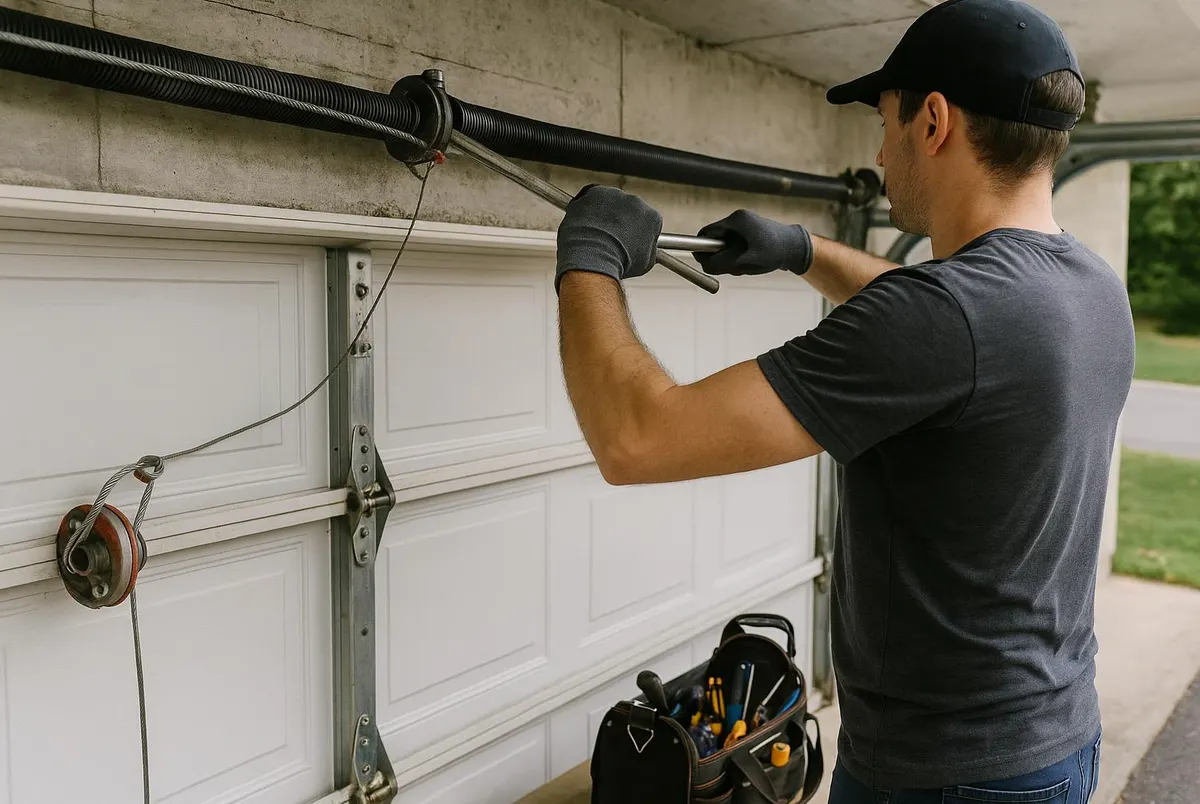
Fixing the problem is a different story. Garage door springs are wound under extreme tension — enough to cause serious injury if released improperly. Do not attempt to adjust, tighten, or replace a torsion or extension spring yourself. This is true everywhere, but it matters even more here, where humidity and salt exposure can cause springs to corrode unevenly, making them more unpredictable when under load.
When to Call Precision Garage Door of Gulf Breeze
If your door fails the balance test, slams down, drifts upward on its own, or your opener sounds like it's working harder than it used to, it's time to call us. We provide Garage Door Spring Repair to correct uneven or worn-out tension safely, and our Garage Door Maintenance & Tune-Up service checks springs, cables, rollers, and opener force settings together, so small issues don't turn into a burned-out motor or a door that falls off track during the next round of storms.
If your garage door isn't passing its own balance test, don't wait for the opener to fail first. Call Precision Garage Door of Gulf Breeze, FL today and we'll get it inspected and corrected right the first time.